
Nike dropped the Air Jordan 1 in 1985, and it sold faster than anyone expected. Four decades later, the company still can’t produce enough limited-edition kicks to meet demand. That gap between supply and desire created a $10 billion resale market and forced brands to rethink how they sell their most coveted products.
The answer? Raffles.
The Bot Problem That Changed Everything
Open sales worked fine when sneakerheads had to line up outside stores at 4 AM. The internet changed that equation completely. When brands moved releases online, automated software (bots) started buying up inventory within seconds of a drop going live.
Nike blamed bots for canceling multiple online launches in 2015, including the Air Jordan I Pinnacle release. The company’s internal data revealed something staggering: they receive roughly 12 billion illegitimate raffle entries every month from automated systems. Websites crashed under the traffic. Genuine customers couldn’t even load the checkout page before stock disappeared.
Retailers tried IP monitoring, CAPTCHA tests, and behavioral tracking. Bot developers adapted to each countermeasure within weeks. The arms race became expensive and exhausting for everyone involved.
How Raffles Level the Playing Field
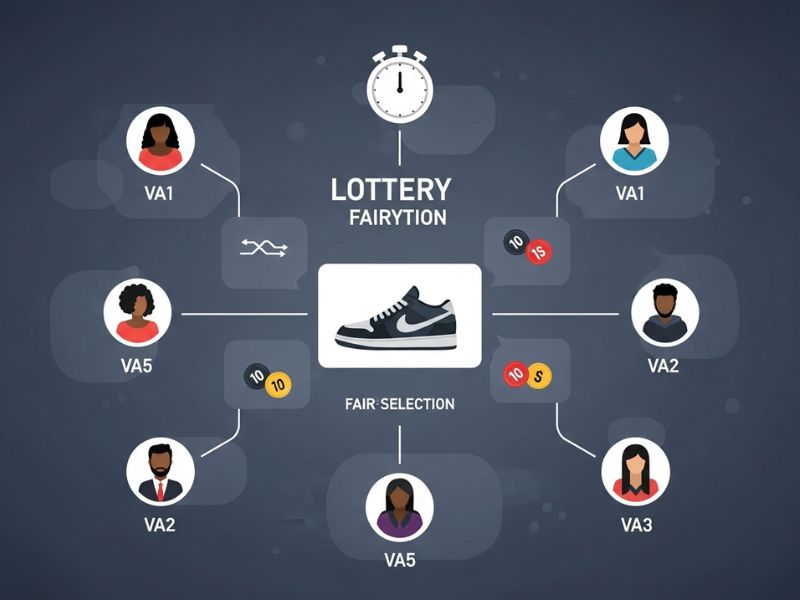
Raffle systems fundamentally change the purchasing dynamic. Instead of rewarding whoever clicks fastest, they give every registered participant an equal shot at buying. You can learn about sneaker raffles and their various formats to understand the mechanics behind each brand’s approach.
Nike’s SNKRS app runs what they call “Draws” for high-heat releases. Customers get a 2 to 15 minute window to enter, then the system randomly selects winners. Speed doesn’t matter once you’re registered. Adidas operates similarly through their Confirmed app, which originally launched for Yeezy releases in 2015.
The psychology makes sense. When consumers face perceived scarcity, they assign higher value to the item according to research on scarcity in social psychology. But that scarcity needs to feel fair, or customers resent the brand instead of chasing the product.
The Economics Behind Manufactured Exclusivity
Here’s what most people don’t consider: sneaker brands could simply make more shoes. Adidas produces only 40,000 pairs of each Yeezy release when demand clearly exceeds that number by orders of magnitude. Nike could flood the market with Travis Scott collaborations. They choose not to.
Limited supply at below-market prices creates what economists call “hype.” Even when willing customers can’t purchase the limited edition at retail, the excitement promotes a favorable brand image and pushes consumers toward more widely available models. This strategy has turned sneakers into a legitimate asset class, with resale platforms like StockX functioning as real-time price guides where transactions are public and shoes trade like commodities.
The resale premium signals desirability. When a $170 retail shoe trades for $400 on the secondary market, it anchors consumer perception. Paying $130 for a general release suddenly feels like a bargain.
Why Brands Accept Reseller Activity
You might think companies would fight harder against resale. But research from the University of Arkansas Supply Chain Research Center suggests retailers have limited incentives to eliminate the problem entirely. While bots account for nearly 100% of traffic during some releases, the existence of a thriving secondary market validates the brand’s cultural relevance.
Nike CEO John Donahoe explained their approach differently. The company now sends personalized purchase offers to members based on engagement and past attempts. For the Off-White Dunk release, 90% of invites went to members who had previously lost on similar collaborations. Loyalty gets rewarded, but randomness remains core to the system.
Brands want the perception of fairness without eliminating scarcity. Raffles accomplish both.
What This Means for Collectors
The raffle system isn’t going anywhere. Brands have discovered that controlled scarcity combined with randomized access creates sustainable hype without the chaos of first-come-first-served drops.
For consumers, this means adjusting expectations. Entering multiple raffles across different retailers increases your odds. Building a history with brand apps (Nike Member status, for instance) can open exclusive access opportunities over time.
The frustration is real. But from the brand’s perspective, the current system generates headlines, maintains desirability, and keeps customers engaged with apps and notifications between releases. And those who miss out? They often buy the next general release anyway, which was probably the point all along.