
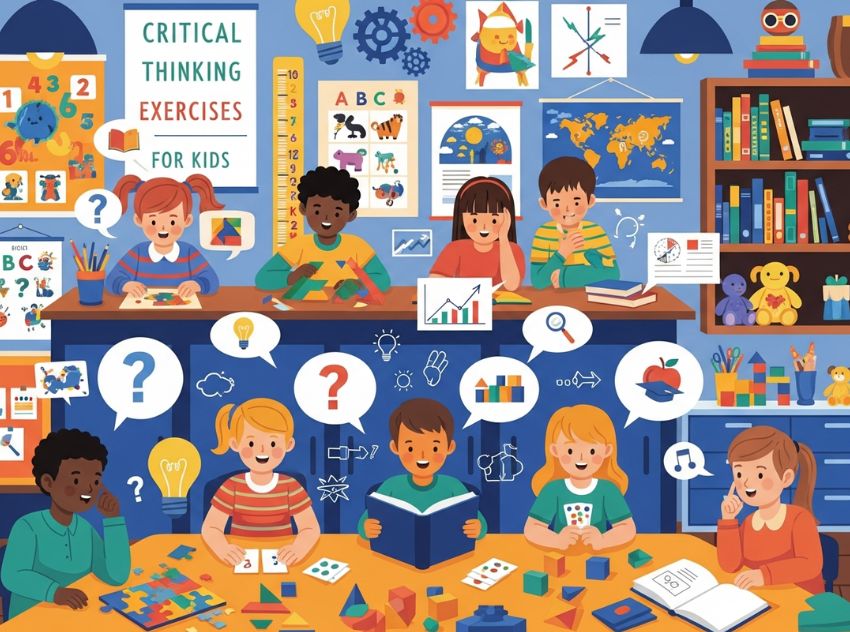
Thinking is a skill. It grows with use. When people think well, they solve problems better. They also make smart choices. Therefore, thinking matters at every age. However, it is best to start early. Kids who practice thinking learn faster. They feel more assured, too. It’s no wonder critical thinking exercises for kids are so useful.
Learning has to be active. Children must ask questions. They ought to look into thoughts. In the meantime, they should endeavor to try new ways to solve some small problems. Thus, their minds become strong.
Definition of Critical Thinking
Thoughtful thinking is the essence of critical thinking. It means looking at facts. It also means asking why something happens. Kids who think this way do not guess. Instead, they look for reasons.
For example, a child reads a story. Then the child asks why a character made a choice. After that, the child tries to find proof in the story. Therefore, learning becomes deeper.
Why Thinking Starts in Childhood
Kids learn many things each day. They learn words. They learn numbers. They also learn how to act with others. But they must also learn how to think.
A child thinks well, he/she learns better. They also resolve minor issues with ease. Thus, critical thinking exercises for kids lay the groundwork for school and life.
Simple Methods Kids Can Think
Learning should be more useful and easier for kids. They require straightforward ones. For instance, a teacher might pose the question, “What do you think will happen next? Children subsequently exchange ideas. They lend their ear to others.
Sorting is another easy task. Children arrange their toys according to their size or color. Subsequently, they clarify their reasons for choosing that path. Because of this, daily play includes critical thinking activities for kids.
Using Stories to Build Thought
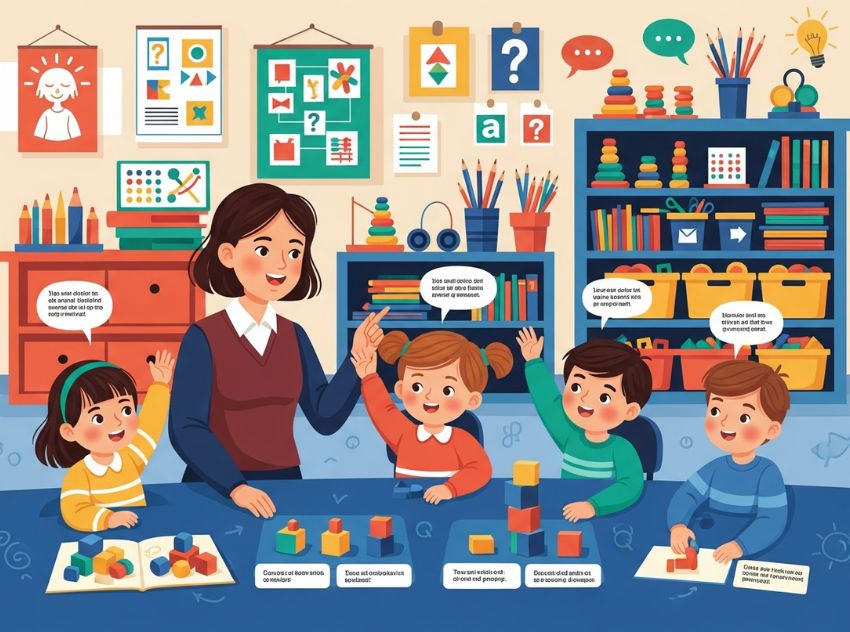
Stories are powerful. They show people, places, and problems. When kids hear a story, they imagine. They also feel what the characters feel.
Teachers can ask, “Why did this happen?” Kids then think and answer. They may also guess what comes next. Therefore, stories turn into critical thinking exercises for kids that are fun and useful.
Games That Train the Brain
Games are not only for fun. They also teach thinking. Puzzles make kids try again and again. Board games teach planning. Word games build logic.
When kids play, they must choose moves. They must also see results. Therefore, games are simple critical thinking exercises for kids that feel like play.
Asking Good Questions
Questions lead to answers. When kids ask “why,” they learn more. When they ask “how,” they dig deeper.
A teacher can show a picture. Then kids can ask questions about it. They may ask who is in the picture. They may also ask what is happening. As a result, critical thinking exercises for kids become easy to use.
Real-Life Problems for Kids
Kids face small problems every day. They may not find a toy. They may not know which book to read. These moments can teach thinking.
Adults can ask, “What can we do?” Kids then share ideas. They try one idea. If it fails, they try another. Therefore, critical thinking exercises for kids happen in real life too.
Group Talk and Sharing Ideas
When kids talk together, they learn. One child may have one idea. Another child may have a new one. When they share, they grow.
Group talk also teaches listening. Kids hear views that are not their own. Therefore, critical thinking exercises for kids help build respect and teamwork.
Writing and Drawing to Think
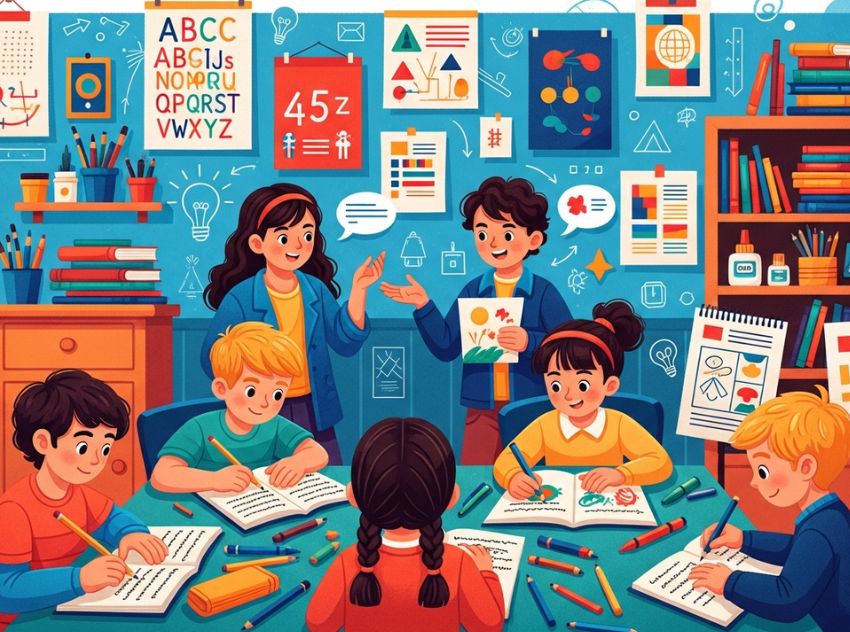
Some kids like to write. Others like to draw. Both help thinking. When kids write a sentence, they choose words. When they draw, they choose shapes.
After that, they explain what they made. This step is key. It turns simple work into critical thinking exercises for kids.
Using Charts and Pictures
Pictures tell stories. Charts show numbers. Kids can look at a chart and ask what it means. They can also compare two pictures.
For example, they may see which picture has more objects. Then they explain why. Therefore, visual tools become critical thinking exercises that feel clear and easy.
Moving From Kids to Grown-Ups
Thinking does not stop at childhood. It grows. Teens use it in school. Adults use it at work and at home. That is why critical thinking exercises for adults also matter.
Adults solve big problems. They plan budgets. They also make choices for their families. So, thinking skills must keep growing.
How Adults Practice Thinking
Adults read the news. They also see many opinions. However, they must check facts. They must also compare ideas.
For example, an adult may read two reports. Next, they identify what is the same and what is different. As a result, exercises for adults with critical thinking help them make sound decisions.
Family Activities That Build Thought
Families can think together. They can plan a trip. They can also cook a meal. During these tasks, they make choices.
Parents can ask kids, “Which way is better?” Kids then share ideas. Adults listen too. Therefore, critical thinking exercises for kids and critical thinking exercises for adults take place simultaneously.
School Activities That Help Thinking
Schools play a big role. Teachers give tasks that need thought. They also ask open questions.
For instance, a teacher may present a question with multiple possible solutions. Kids then explain their choice. Therefore, schools help turn lessons into critical thinking exercises for kids.
Why Practice Matters
Thinking is like a muscle. It expands with use. They become better thinkers if kids practice often. By continuing to practice, adults stay sharp.
This is why daily considerations should take place. You don’t have to make it hard. They only need to be done often.
Common Mistakes to Avoid
At times, grown-ups respond too quickly. Nonetheless, kids should try first. They must commit mistakes. After that, they discover.
Additionally, we must not rush the children. Give them time to think. As a result, patience makes thinking exercises for kids more applicable.
Long-Term Benefits Of Learning Activities For Kids
Children who think well do well in school. They also feel proud of their ideas. Adults who think well solve problems calmly. They also make fair choices.
So, thinking builds confidence at every age. It also builds success.
Bringing It All Together
Thinking starts small. It grows over time. Tales, contests, and inquiries all assist. Real-life problems — teach a lot too.
Families and schools can work together. They can give space to think. They can also guide gently. As a result, critical thinking exercises for kids and critical thinking exercises for adults create strong minds.
Conclusion
Thinking is a gift. It helps people understand the world. It also helps them act wisely. Kids who practice thinking grow into smart adults. Adults who keep thinking stay ready for change.
By using stories, games, and real-life tasks, everyone can improve. When thinking becomes part of daily life, learning becomes deeper. Therefore, strong thinking today leads to a better tomorrow.
FAQs About Critical Thinking Exercises for Kids
1. What is the definition of critical thinking?
Exercises that get kids thinking are simple activities that build thinking skills. Children learn to ask questions. They also assist them in finding enhanced responses. So, it allows deeper learning.
2. Why are Critical Thinking Exercises helpful for Kids?
The exercises enable kids to think clearly. They further assist them in problem-solving. Therefore, children grasp the subjects more effectively. This makes them feel more confident.
3. How often should critical thinking exercises for children be done?
Children must practice them regularly. A good example is their use in school. They are also able to use them there. So, critical-thinking abilities enhance with time.
4. Can critical thinking exercises for children be helpful in everyday life?
Certainly, they lend significant assistance. Children learn ways of making decisions. They also learn to solve minor issues. Consequently, it becomes easier to accomplish everyday tasks
5. Are critical thinking activities for kids useful for all ages?
Indeed, they are effective for all kids. Little children master fundamental skills. However, older kids develop complex thinking. As a result, everyone wins.