
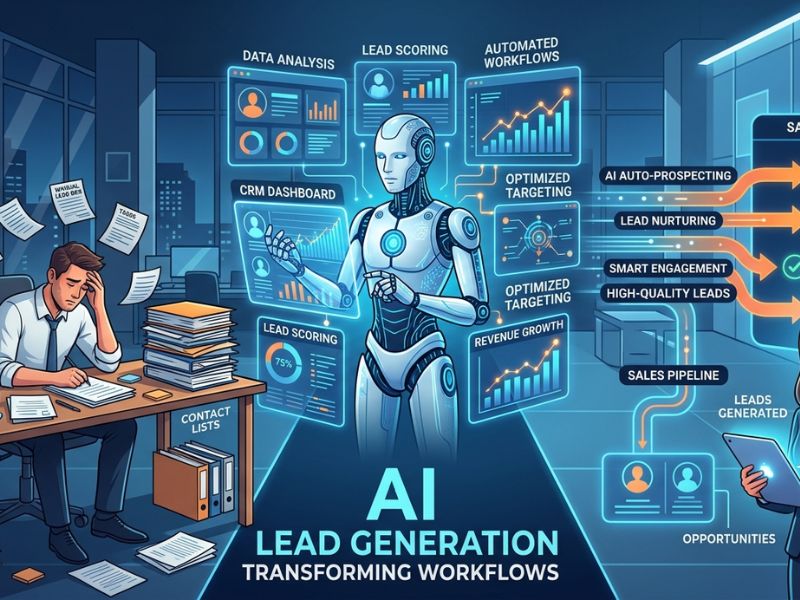
Lead generation has never been short on repetitive work. Sales teams still need to find the right accounts, check buying signals, clean lists, write outreach, follow up, update CRM records, and decide which leads deserve attention first. The problem is that much of this work absorbs time before a real sales conversation even begins.
That is where AI lead generation is changing day-to-day sales operations. AI agents are no longer limited to helping someone draft a better email. They can now research accounts, enrich records, monitor signals, trigger outreach, score leads, and prepare sales reps with usable context. The best use cases are practical. They remove manual friction from the parts of lead generation that have always been slow, inconsistent, and easy to neglect.
1. Prospect Research Becomes Faster and More Useful
Manual prospect research is often uneven. One rep spends ten minutes checking a company website, LinkedIn activity, recent funding, and hiring patterns. Another gives the account a quick scan and moves on. The result is inconsistent outreach because the research behind it varies from person to person.
AI agents can handle much of that first pass. They can pull company details, identify likely buying triggers, summarize recent activity, and surface points that may matter in a sales conversation. The rep still needs judgment, but the blank-page work is reduced.
The better systems do more than collect facts. They turn scattered information into a short account brief: what the company does, why it may be relevant now, who may be involved, and what angle is worth testing. That is a real improvement over asking salespeople to assemble context from ten browser tabs before every touchpoint.
2. Lead Lists Get Cleaner Before Sales Reps Touch Them
Bad data is one of the quiet killers of lead generation. Outdated roles, wrong email addresses, duplicate contacts, missing company details, and weak segmentation all waste selling time. A list can look large and still be nearly useless.
AI agents help by checking records, matching companies against target criteria, identifying duplicates, and filling in missing fields. They can also flag records that no longer match the ideal customer profile. That matters because a clean list changes the entire rhythm of outreach. Reps spend less time guessing and more time working on accounts that have a reasonable fit.
This is not a glamorous part of sales automation, but it is one of the most valuable. Better inputs usually lead to better outreach, cleaner reporting, and fewer awkward handoffs between marketing and sales.
3. Account Prioritization Stops Being a Guessing Exercise
Not every lead deserves the same attention. Some accounts are active, relevant, and close to a buying moment. Others are technically in the database but have no sign of urgency. Manual prioritization often depends on whatever the team noticed last, which is rarely enough.
AI agents can read signals across multiple sources and help rank accounts by fit and activity. Website visits, content engagement, job postings, technology changes, funding announcements, hiring patterns, and CRM history can all help shape that ranking. The goal is not to create a magic score. The goal is to give sales teams a better starting order.
This helps managers, too. Instead of pushing reps to “do more outreach” in a general way, they can direct attention toward the accounts most likely to respond. That is a cleaner use of time, especially for small teams with limited sales capacity.
4. Outreach Becomes More Contextual Without Starting From Scratch
Personalized outreach has always sounded better than it feels to produce manually. Reps are told to write relevant messages, but they may be working large lists, tight deadlines, and multiple sequences at once. The result is often personalization that looks personal only in the first line.
AI agents can draft outreach based on real account context. They can reference a role, a company change, industry pressure, a product use case, or a recent signal without forcing the rep to write every message from scratch. That does not mean every AI-written message should go out untouched. It means the first version is closer to useful than a generic template.
The human role becomes editing, judgment, and restraint. A good rep can remove awkward phrasing, sharpen the angle, and decide if the message feels credible. AI helps with the heavy preparation. The rep protects tone and relevance.
5. Follow-Up Becomes More Consistent
Lead generation often breaks down after the first touch. A rep sends an email, makes one call, gets distracted by a meeting, and the follow-up slips. Multiply that by hundreds of contacts, and the pipeline quietly leaks.
AI agents can keep follow-up sequences on track. They can trigger the next action, adjust timing based on engagement, summarize previous activity, and remind the rep when a contact deserves a more personal response. This is especially useful when a lead opens several emails, visits a pricing page, or engages with a webinar after a period of silence.
Consistency matters because many sales conversations do not start after the first message. They start after the third, fourth, or fifth well-timed touch. AI agents make that discipline easier to maintain without turning the rep into a calendar assistant.
6. CRM Updates Become Less Painful
CRM hygiene is one of those tasks everyone agrees is necessary and almost nobody enjoys. Notes get skipped. Stages go stale. Contact details are incomplete. Managers then spend pipeline reviews separating reality from outdated records.
AI agents can reduce that burden by summarizing calls, logging activity, updating fields, creating tasks, and identifying missing information. A rep still needs to verify important details, but the manual-entry load lightens.
This matters because CRM quality affects more than reporting. It shapes lead routing, forecasting, account history, customer handoff, and future campaigns. When CRM data improves, the next lead generation cycle starts from a stronger base.
7. Handoffs Between Marketing and Sales Get Tighter
The gap between marketing-qualified leads and sales-ready conversations has always been messy. Marketing may see engagement. Sales may see weak intent. The lead gets passed over, delayed, or worked on with the wrong message.
AI agents can help by packaging the lead context before the handoff. Instead of sending a name and a score, the system can summarize what the lead engaged with, which pain point seems likely, what company data supports the fit, and what the next best action may be. That gives the rep a better reason to act.
The value is especially clear in B2B buying groups. One person may download a report, another may attend a webinar, and a third may control the budget. AI agents can connect those actions at the account level so sales sees the broader pattern rather than isolated activity.
What This Means for Sales Teams
AI agents are replacing manual lead-generation workflows, but they do not eliminate the need for sales judgment. The strongest teams will use agents to remove slow work, clean the data, strengthen account context, and protect follow-up discipline. Human reps still need to decide how to position the conversation, when to push, when to pause, and how to build trust.
The real shift is in the shape of the work. Salespeople should spend less time building lists, checking records, writing first drafts, and updating systems. They should spend more time on qualification, buyer conversations, account strategy, and deals that need human intelligence. That is a healthier use of the sales function.
AI agents will not fix a weak offer, a poor ideal customer profile, or careless messaging. They will make a strong process faster and more consistent. For companies that already know their market and need better execution, that is a meaningful change.