
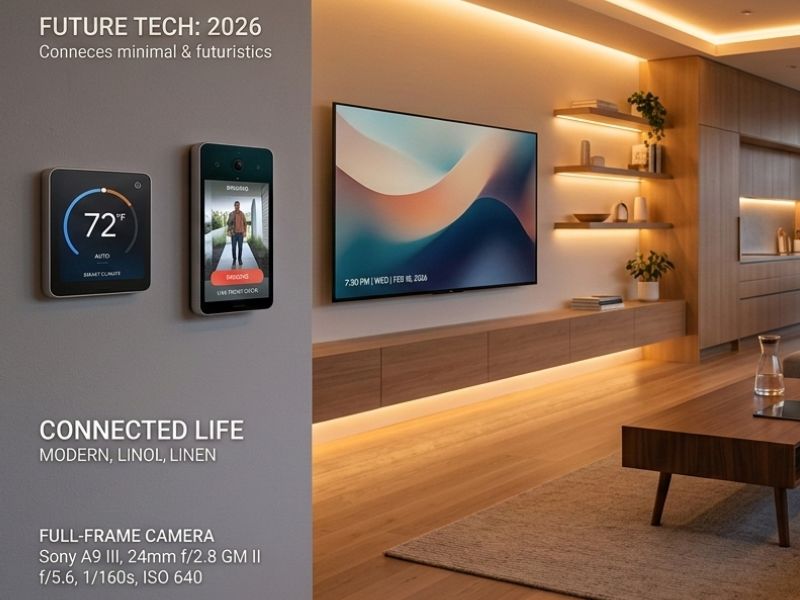
Three years ago I bought my first smart bulb. It took me an embarrassingly long time to set it up, the app crashed twice, and by the end I was genuinely questioning my life choices. But when I finally got it working and turned off my bedroom light without getting off the couch; I was done for. Within six months my whole apartment was wired up with smart home devices and I have not looked back since.
That is not a sales pitch. That is just what happens to most people once they actually start using this stuff. So if you are sitting on the fence about whether to invest in smart home technology in 2026, let me save you some time and give you the honest version of this conversation.
Where Things Stand in 2026
The smart home industry has grown into something nobody can really ignore anymore. The market has crossed $180 billion this year, over half of American households own at least one smart home device, and the average connected home now has somewhere between 15 and 20 gadgets running at any given time.
What actually changed though; and this is the part that matters; is that smart home tech finally got easy. For years the biggest problem was compatibility. If you were asked to buy a light bill that worked only with Alexa, a camera that worked with Google, and a thermostat that worked with neither. Your home seemed like a tangled mess of technology that refused to communicate. It wasn’t a smart system; just a jumble of gadgets.
The Matter protocol fixed that. A common universal standard was unanimously agreed on between Samsung, Apple, Google, Amazon. Most likely, anything you buy will work with what you already have. That one change made the whole ecosystem make sense in a way it simply did not before.
Start With Security: Seriously, Just Start Here
I tell everyone the same thing when they ask me where to begin with smart home devices. Get a video doorbell first. Do not overthink it, do not wait until you have a full plan, just get one.
Here is the thing about video doorbells; they sound like a minor convenience until you actually have one. Then you realize you have not missed a single package delivery in months. You know exactly who is at your door before you open it. You can tell the pizza guy to leave it by the back door while you are stuck in a meeting. These are small things individually but they add up to a genuinely different experience of being at home.
Beyond doorbells, smart cameras in 2026 have gotten impressively good at not wasting your time. AI can now identify a person, a car, a dog and a delivery package. As a result, rather than receiving a daily bombardment of 40 irrelevant motion alerts, you only get three relevant alerts that truly matter. Ring, Eufy, and Arlo are the names worth looking at. Eufy is my personal pick because it stores footage locally and you are not stuck paying a monthly fee forever.
Once you have the cameras sorted, smart locks are a worthy addition. Allowing someone in your house when you’re not there, making up a temporary code for a guest, or just never fumbling around for your keys again those are little daily upgrades that make you wonder how you did without them.
Lighting Is Where People Get Addicted
Almost everyone I know who has gone deep into home automation devices started with smart lighting. It is the gateway and there is a good reason for that. The results are immediate, the cost is low, and the satisfaction is weirdly high.
In 2026 smart lighting has moved past just on and off and different colors. Circadian lighting is becoming genuinely mainstream now. The idea is simple; your lights shift throughout the day to match natural sunlight. Bright and cool in the morning to help you wake up properly. Make it warmer and dimmer in the evening to alert your brain that sleep is near. Initially, I didn’t buy into this concept but after trying it, I felt like I was dozing off quickly. Small difference, real result.
If you are looking for something that just works without any drama for a few years, you can trust Philips Hue. The LIFX is a sound choice if you want to go hubless. Govee is the budget movie for anyone who wants colorful ambient lighting without spending serious money.
A Smart Thermostat Will Actually Pay For Itself
Out of all the smart home devices I have ever bought, the thermostat gave me the clearest return on investment. You install it, it watches your routine for about a week, and then it just handles everything on its own. You stop thinking about temperature entirely. You receive your energy bill and realize that it’s a fair amount lower than what you used to pay.
In 2026, smart thermostats will become highly advanced and strategic in their energy usage. They use electric price forecasts, weather forecasts, and grid demand forecasts in real time. Some models link up with utility programs that automatically lower your usage at peak hours, in exchange for bill credits. You do not have to do anything; the device handles the optimization while you go about your life.
Nest and Ecobee are the two names that consistently come up when people ask for recommendations. Both are excellent. Ecobee has a built-in air quality sensor if that matters to you. Either one will earn back its purchase price within a year for most households.
Smart Speakers Tie Everything Together
Every intelligent home installation needs one point of control and as natural a way there is to handle that, the smart speaker. The two main players in this category in 2026 will be Amazon Echo, and Google Nest Hub. They’re both pretty great products.
Although it may feel gimmicky, using voice control will quickly become second nature. I have been using my phone to control the lights, check if I locked the door, turn up the temperature, and more so often, it feels silly to do so manually now. Three quarters of American homes now use voice assistants. This tells you pretty clearly that this has stopped being a novelty and started being just how things work.
Smart speakers in 2026 will also serve as local hubs for other devices, cutting down on extra boxes on your network and setup.
The Best Smart Gadgets Worth Buying Right Now
In 2026, discover the best smart gadgets that deliver on their promises, and, unlike mere spec sheets, we’ve based our choices on real performance.
- The Amazon Echo Pop (2nd Gen) is the best entry-level smart speaker for anyone wanting to build a smart home. High-quality products at affordable prices.
- Google Nest Thermostat has a clean design that learns your schedule quickly and saves real money each month.
- Ring Spotlight Cam Pro is the best outdoor security camera. The night vision colors and 3D motion detection are impressive.
- Philips Hue Starter Kit is the most dependable smart lighting system. If you want something to last worth the price.
- TP-Link Tapo P125M Smart Plug: Matter-certified, compatible with everything, costs next to nothing Purchase many.
- The iRobot Roomba Combo j9+ can vacuum and mop simultaneously and self-empty. You’re now free from this chore for good.
The Part Nobody Talks About: Your Home Now Predicts Problems
This is the shift happening in home automation devices right now that I find genuinely fascinating. We have moved past automation into something closer to prediction.
Modern appliances have sensors that keep check in everything. When a bear starts to wear, a heating element degrades, or a motor pulls more power than it should, they catch it, and warn you before anything breaks. Your washing machine will warn you about a problem before flooding your laundry room. Your water heater gives you a warning before you experience the cold water shower on a winter morning.
That is not just convenient. That is avoiding real, expensive damage. And it is becoming standard in higher-end smart home devices rather than being some rare premium feature.
Privacy Stuff That Actually Matters
Cameras and microphones inside your home are serious things and deserve to be treated that way. This is what helps and what’s just noise.
Make sure to change the default password on every new device you buy. Make your smart home devices, like Nest and Ring, connect to a different wifi from your computer or phone. No vital devices will be at risk if one appliance is hacked into.
Continue to keep your firmware updated as manufacturers update it regularly, but only if you have installed it. When it comes to cameras, consider a brand that can store to a local source so your footage isn’t on a server somewhere.
That is genuinely it. None of it is complicated, it just requires a few minutes of attention when you first set things up.
How to Actually Get Started Without Losing Your Mind
Here is the no-overthinking version. Buy a smart speaker and spend a week getting comfortable with voice control. Then grab a smart plug and connect your most used lamp to it. Make a schedule. See how it feels.
Next, notice what happens at home on a daily basis that really annoy you. It may be hard to imagine becoming a victim of an unsecured home, but that can happen when you don’t realize packages have been stolen, lights are still on, you come home to a cold house, or the door is unlocked. Find the specific problem and then find the smart home device that solves it. Build your system around real frustrations rather than a shopping list from a review article. That approach works better than anything else.
Bottom Line
The smart home devices of 2026 work properly, their prices begin to make sense and they can be set up simply enough that almost anyone can do it. Security cameras truly provide peace of mind.Thermostats save real money. Lighting makes your home feel genuinely better to live in.
Pick one problem in your daily life at home. Find the device that solves it. Start there. As soon as you start working in this way, everything comes naturally and before long your home starts working with you.
Frequently Asked Questions
Are smart home devices worth the price for your house?
Of course, camera and thermometer, particularly smarter ones. From the first day onward, both provide clear advantages.
How many gadgets does an average house own?
Most people typically have between 15 and 20 names (normally two or three to start with) and build them up over time.
Q3 Will I need to be technical to set these up?
Not in the least. If any application can be downloaded by a user and basic steps are easily followed, then such an individual can handle almost any smart home device in the year 2026.
What is important and why should I care?
The universal compatibility standard implies that devices from different brands work together. Check the box for a warranty before buying anything.
Q5. Can your smart home devices get hacked?
Devices can get hacked, but using strong passwords, creating a separate Wi-Fi network for your devices, and properly updating the firmware makes the risk almost zero.