For developers, businesses, and startups who may not have had extensive experience in app development up to this point, mobile app development frameworks have become an integral part of their operations. Picking the right framework can save time, cut costs, and increase app performance. In this guide, we take a look at the best mobile app development frameworks and individual app developers who want to select the right mobile framework for their projects.
Whether you are new to app development or an experienced mobile developer, this guide will provide you with enough insights about mobile app development frameworks and their benefits , as well as actionable tips to pick the right one for your next app.
What Is a Mobile App Development Framework?
Mobile app development frameworks are software packages designed to aid developers in building mobile applications for multiple device platforms, including smartphones and tablets. These are frameworks that offer you pre-written code, pre-built components, and tools to accelerate your job.
Rather than code up feature after feature from scratch, developers can leverage mobile app development frameworks to produce applications that have consistent performance and user experience. They also provide cross-platform compatibility with various mobile OSs, including iOS and Android.
To put it simply, a mobile framework serves as the foundation or blueprint for app development, saving time and effort by enhancing efficiency.
The Importance of Mobile App Development Frameworks
There are a lot of advantages when you use MOBILE APP DEVELOPMENT FRAMEWORKS. They make it faster and cheaper for developers to write apps that work perfectly across devices. Here are a few reasons frameworks matter:
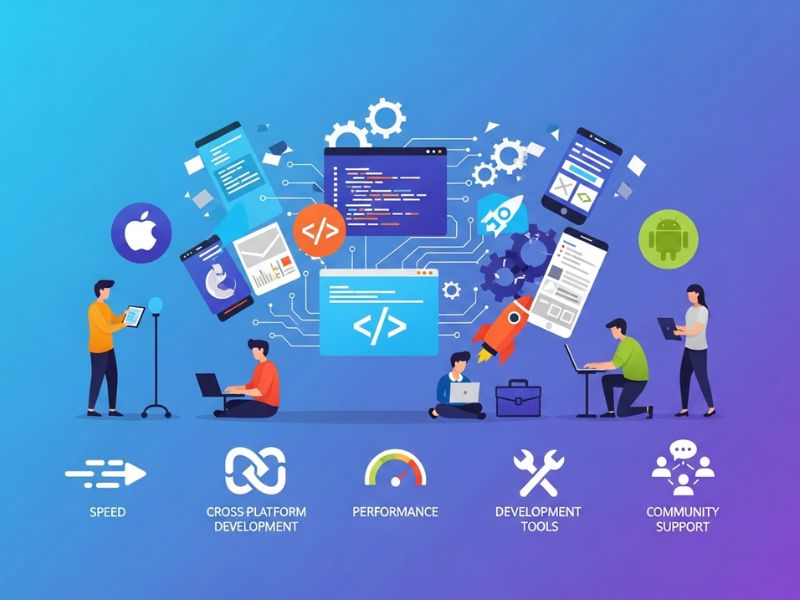
- Speed up development: Shortcut to getting your app developed quickly with prepackaged code or open-source components.
- Cross-Platform Development: With most frameworks, you can build apps for iOS and Android simultaneously.
- Enhanced Performance: Frameworks are designed to be fast, meaning that apps perform well.
- App Development Tools: Frameworks usually provide debugging, testing, and feature integration tools.
- Community Support: Widely used frameworks have a big community, so finding help and tutorials is easy.
By knowing the value of mobile frameworks, companies can select the right one to meet their app’s objectives and technical requirements.
Top Mobile App Frameworks 2026
In 2026, developers have so many mobile app development frameworks, which is good or bad. Both frameworks have advantages depending upon the type of app, audience, and features that are desired. Here are a few of the popular mobile app development frameworks:
React Native
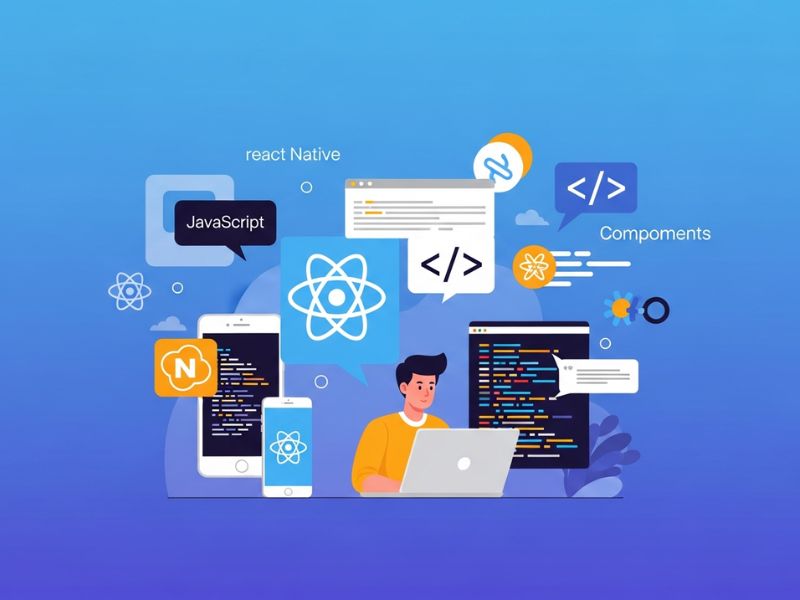
Is React Native one of the most popular mobile frameworks? Developers can write apps for both iOS and Android in JavaScript. One of the greatest assets of React Native is its speed, lightweight nature, and dedicated community.
Key Features:
- Cross-platform development.
- Hot-reloading for faster testing.
- Access to native components.
- Large community and library support.
For the sake of quick development, with consideration being paid to app performance, React Native suits a need businesses have.
Flutter
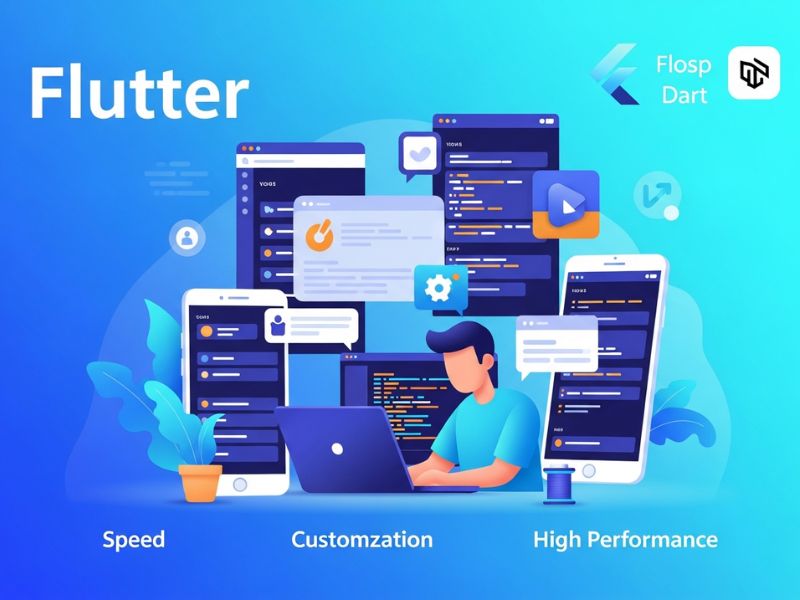
Flutter is a framework introduced by Google, and its programming language is Dart. It is famous for making beautiful-looking applications with super smooth animations. Flutter enables app developers to write apps for iOS, Android, and the web with one codebase.
Key Features:
- Fast development with “hot reload.”
- Beautiful and customizable UI widgets.
- Native compilation results in very high performance.
- Strong support for cross-platform apps.
Flutter is ideal for startups and businesses striving to develop high-quality apps that are compatible with multiple-platforms.
Xamarin
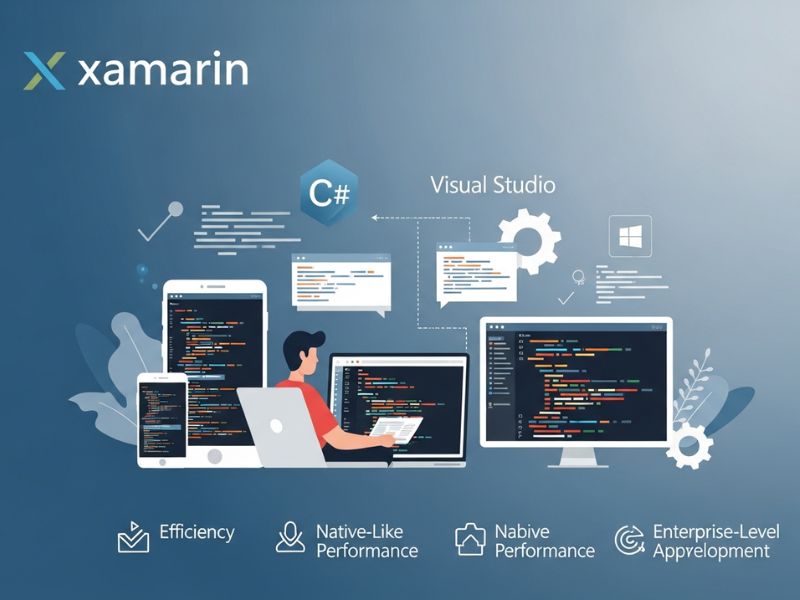
Xamarin is a framework owned by Microsoft, and it builds mobile apps utilizing C#. It provides developers with a way to reuse code for their iOS, Android, and Windows apps. Xamarin is a popular platform that integrates well with Microsoft tools.
Key Features:
Cross-platform development.
Native-like performance.
Integration with Visual Studio.
Access to platform-specific APIs
Xamarin is a fit for companies that are already using Microsoft products or that are developing enterprise apps.
Ionic
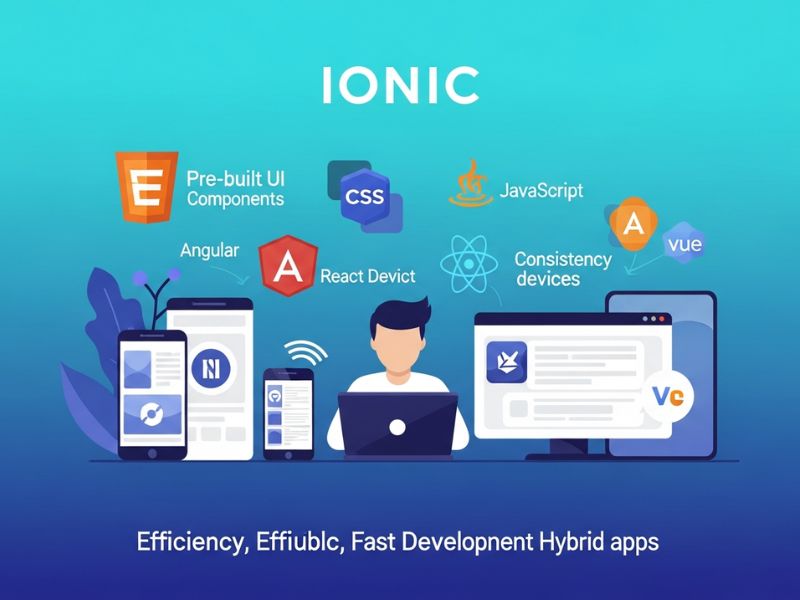
Ionic is a framework that employs HTML, CSS, and JavaScript to develop mobile applications. It is a hybrid framework that allows apps to work across platforms with the same codebase. Ionic is well known for its ability to build apps fast and efficiently.
Key Features:
- Cross-platform app development.
- Pre-built UI components.
- Works with Angular, React, or Vue.
- Easy testing and debugging.
Ionic, is it a good choice for you when your app also needs to have a uniform appearance on all devices and a fast rollout?
SwiftUI and Kotlin Multiplatform
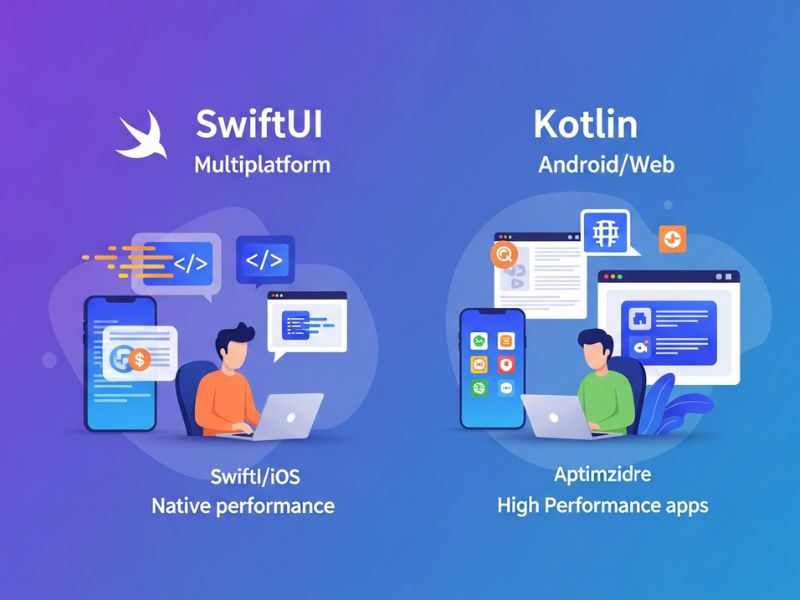
SwiftUI and Kotlin Multiplatform are a set of modern libraries that tout native development. SwiftUI is for iOS apps, and Kotlin Multiplatform also does Android, iOS, and web. Both libraries offer the performance benefits of native-speed apps.
Key Features:
- Native performance.
- Access to platform-specific features.
- Strong developer support.
- Efficient UI and backend integration.
Such are the frameworks perfect for apps requiring high speed and optimization for devices separately (native).
Mobile App Development Frameworks Comparison Table
You can place this table right after “Top Mobile App Frameworks 2026” section.
| Framework | Platform | Language | Performance | Best For |
|---|---|---|---|---|
| React Native | iOS, Android | JavaScript, TypeScript | Near-Native | Fast development, startups, cross-platform apps |
| Flutter | iOS, Android, Web | Dart | High (Native Compiled) | Beautiful UI, smooth animations, scalable apps |
| Xamarin / .NET MAUI | iOS, Android, Windows | C# | Native-Like | Enterprise apps, Microsoft ecosystem |
| Ionic | iOS, Android, Web | HTML, CSS, JavaScript | Moderate | MVPs, hybrid apps, quick launch |
| SwiftUI | iOS | Swift | Native | High-performance iOS apps |
| Kotlin Multiplatform | Android, iOS, Web | Kotlin | Native | Shared logic with native performance |
App Development Tools That Work along with Mobile App Development Frameworks
App development franchises deliver the most value when combined with application development tools. These tools make it easier for developers to design, test, and maintain apps.
Code Editors and IDEs
- Visual Studio Code: Works with many frameworks, including React Native and Flutter.
- Android Studio: An absolute must-have for Android development, complete with debug and testing features.
- Xcode: Apple’s official IDE that is used for developing iOS applications, also features SwiftUI support.
Testing and Debugging Tools
Appium: A cross-platform tool for automating mobile app testing.
Firebase Test Lab: Google’s cloud-based app-testing infrastructure for Android and iOS apps.
Browser Stack: Provides real device testing on various mobile platforms.
Design and Prototyping Tools
- Figma: Used for designing app interfaces and interactive prototypes.
- Sketch: If you’re doing UI design and want something that can integrate well into a dev workflow.
- Adobe XD: Provides design and prototype features for mobile apps.
Collaboration and Project Management Tools
- Jira: To know how much the development is going and to handle the tasks.
- Trello: Trello is an easy-to-integrate task management tool with a twist in the form of boards and cards, perfect for teams.
- Slack: For keeping dev teams in real-time with each other.
When combining app development tools with a mobile framework, it means smooth, error-free, and easy development, leading to a better final product.
Selecting the Right Mobile Framework
It is not always a walk in the park to pick a mobile framework with so many to consider. Here’s what to think about before you decide:
- Project requirements: Decide if you need multiplatform, high-performance, or fast dev.
- Developer Skills: You may want to go with a framework based on what your team is comfortable working in. For instance, React Native relies on JavaScript, and Flutter uses Dart.
- Community Support: Frameworks that have many users can help you easily search for a solution to a problem.
- Performance Requirements: If your app or game needs to be extremely high-performing or have advanced animation, look at native frameworks like SwiftUI or Kotlin.
- Maintenance and Updates: Find a developer platform that receives frequent updates in order to be compatible with new devices and OS versions.
By a detailed assessment of these aspects, companies can use one or another mobile framework that would be most suitable to their technical requirements and financial expenses.
Advantages of Using Mobile Frameworks
Leveraging cross-platform frameworks allows developers and organizations to enjoy several advantages:
- Faster Time-to-Market: Readymade components accelerate the process of coding and testing.
- Cost Savings: Cross-platform frameworks decrease the requirement to create two different apps for iOS and Android.
- Enhanced User Experience: Frameworks guarantee consistency of UI and performance on different devices.
- Scalability – Apps can be updated and scaled with less effort using the clean code and modular architecture.
- Ease of Libraries and Plugins: Libraries are often available in frameworks, which means there is no need to develop some features from the start.
But these benefits are not just limited to start-ups, or big market players, small startups, or an enterprise; they cannot disregard the mobile frameworks.
Common Challenges With Mobile App Development Frameworks
Although there are many advantages of using mobile app development frameworks, developers may experience some issues:
- Performance: A few hybrid frameworks may not be as fast as native for heavy apps.
- Limited Platform Feature Availability: Hybrid frameworks are dependent on third-party plugins for some device-specific functionality.
- Learning Curve: It might take some time to learn new frameworks like Flutter or Kotlin Multiplatform for developers.
- Maintenance: Monitoring of frameworks to keep them updated with new OS releases.
Knowing these issues makes it easier for developers to anticipate pitfalls and provides a more seamless app development process.
How to Build a Mobile App for Android or iOS with Frameworks
Here is a set of best practices to maximise the value you get from mobile app development frameworks:
- Avoid over-engineering your app: Plan your app carefully before starting the development, like what its primary purpose is, who they targeting, and what features you want in it.
- Pick the Right Framework: Pair the framework with your application objectives, performance requirements, and team skills.
- Leverage App Development Tools: Include testing, debugging, and design tools to help accelerate development.
- Performance Optimised: Use efficient code and native components when needed.
- Test on a Variety of Devices: Make sure your app runs correctly on various form factors and OS versions.
These practices will lead you to high-quality apps that meet the users’ needs.
Future of Mobile App Development Frameworks
mobile app development frameworks of the future look good. Over the next few years, as technology advances, frameworks will become faster and more user-friendly while integrating better with AI, cloud services, and IoT devices. Developers can expect:
- AI Innovation: Some of the frameworks might have an AI aspect that is integrated for a personalized user experience.
- Cross-Platform Improvements: Faster and more responsive software on all platforms.
- Low-Code and No-Code Choices: More user-friendly platforms for non-programmers.
- Faster Performance: Truly accelerated, optimized frameworks that equal or outdo native app speed.
By investing in advanced mobile frameworks now, businesses can get ahead of the coming trends in app development.

Conclusion
Mobile application development frameworks are crucial in the production of high-quality cross-platform mobile applications. With a sound understanding of the various frameworks, app development tools, and best practices, developers and companies can create powerful apps that are effective and easy to use.
Whether it’s React Native, Flutter, Xamarin, or any other mobile framework, the important thing is to use whatever best fits your needs for the project as well as your team’s skills. You have to work with the right tools and tactics if you want your app to meet that expectation and still run smoothly on any possible device.
It’s now 2026, and mobile app development frameworks have become more developed, making building apps faster, cheaper, and easier than ever. Begin with the right mobile framework today and develop your next best-loved app.
Frequently Asked Questions (FAQs)
Which is the best mobile app development framework for beginners?
React Native is beginner-friendly. You get to use JavaScript Supports both Android and iOS.
Do mobile app development frameworks save app development costs?
Yes, the cross-platform framework is a time and money saver as it makes it possible to develop for all platforms using just one code base.
Can Mobile App Development Frameworks handle complex apps?
Yes, however, for complex apps, native frameworks such as SwiftUI or Kotlin work better.
Can you access features of the device using a mobile framework?
Most frameworks provide access to the camera, GPS, and notifications; a few might require you to use plugins.
Which mobile app development framework is the best?
Before you choose, think about what type of app you have, and the skills on your team, as well as your budget and performance requirements.