
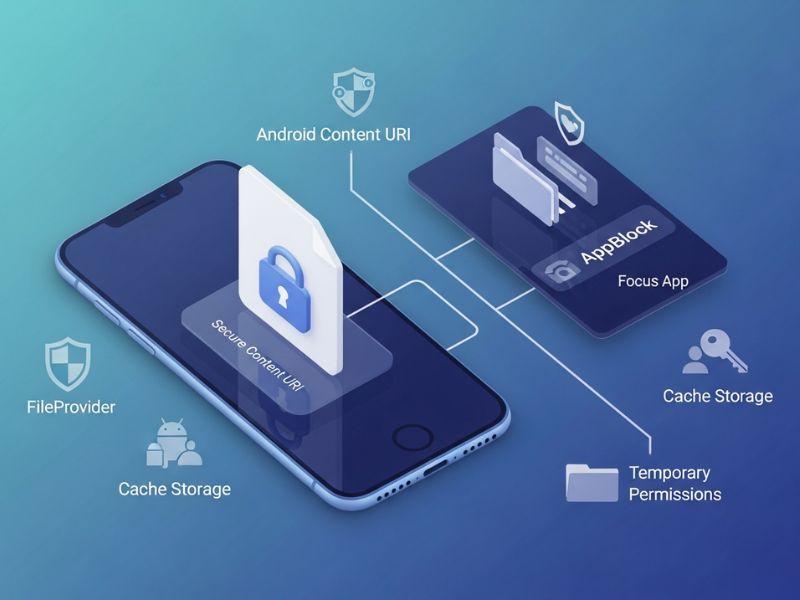
If you’ve encountered the URI content://cz.mobilesoft.appblock.fileprovider/cache/blank.html, you might wonder whether it is safe, why it exists, and what role it plays inside Android apps like AppBlock.
This article explains what this URI is, why Android uses it, and why users should not worry, while also covering the technical details developers care about.
What Is Android FileProvider?
Android FileProvider is a system component that allows apps to securely share files using content:// URIs instead of exposing real file paths.
In the case of content://cz.mobilesoft.appblock.fileprovider/cache/blank.html, FileProvider is used by the AppBlock app to safely load a cached HTML file without revealing internal storage paths.
Why FileProvider Exists
FileProvider exists to:
- Prevent unauthorized file access
- Protect private app storage
- Enforce scoped and temporary permissions
- Improve overall Android security
Apps are no longer allowed to expose raw file paths like file:// because they can be abused.
Why File Paths Are Banned
Older Android versions allowed file paths such as:
file:///data/data/app/cache/blank.html
This approach was insecure because:
- Paths exposed internal directories
- Other apps could misuse shared files
- Permissions were hard to control
That is why Android now enforces content:// URIs, including content://cz.mobilesoft.appblock.fileprovider/cache/blank.html.
content:// vs file:// (Key Differences)
Understanding this difference helps explain why AppBlock uses this URI.
Security
- file:// → Unsafe direct access
- content:// → Secure, permission-controlled access
Permission Scope
- file:// → Anyone with the path may access it
- content:// → Only authorized apps can access it
Lifecycle
- file:// → Permanent exposure
- content:// → Temporary and revocable
Because of these differences, content://cz.mobilesoft.appblock.fileprovider/cache/blank.html is the safer and correct approach.
Why Android Apps Use Cache Files like blank.html
Apps often rely on cached files like blank.html for functional and performance reasons.
Placeholder Pages
When AppBlock blocks a website or app content, it replaces it with a neutral placeholder page instead of showing errors. That placeholder is often loaded from:
content://cz.mobilesoft.appblock.fileprovider/cache/blank.html
Offline Mode
Cached HTML files allow apps to:
- Load instantly
- Work without internet access
- Reduce repeated network calls
This improves speed and reliability.
Blocking & Fallback Logic
Blocking apps need a clean, distraction-free fallback. Using a cached blank page avoids:
- Broken WebView screens
- Error messages
- App crashes
That’s why AppBlock relies on this URI.
content://cz.mobilesoft.appblock.fileprovider/cache/blank.html in Android WebView
Android WebView is a built-in browser component used inside apps.
Why WebView Loads blank.html
WebView loads content://cz.mobilesoft.appblock.fileprovider/cache/blank.html when:
- A website is blocked
- Access is restricted
- A fallback page is required
- Internet is unavailable
This is expected and intentional behavior.
Common WebView Errors
Sometimes users or developers see:
- Blank screens
- Page not loading
- Permission errors
These usually occur when:
- Cache files are cleared
- WebView permissions are misconfigured
- URI access is temporarily revoked
Developer Fixes
Developers typically fix this by:
- Recreating cache files
- Granting URI permissions correctly
- Allowing content access in WebView settings
None of these indicate a security issue.
Common content:// FileProvider Issues (Developer View)
Even safe URIs like content://cz.mobilesoft.appblock.fileprovider/cache/blank.html can face technical issues.
Permission Denied
Occurs if URI permission is not granted properly.
File Not Found
Happens if Android clears the cache.
WebView Blocked
Occurs if WebView is restricted from loading content URIs.
Cache Cleared Problems
Android may remove cached files to free storage.
All of these are normal Android behaviors.
Security Model Behind content://cz.mobilesoft.appblock.fileprovider/cache/blank.html
Android’s security model ensures this URI is safe.
Temporary Permissions
Access is granted only when needed.
Scoped Access
Only this specific file is accessible, not the entire cache.
Automatic Revocation
Once the task ends, permission is removed.
This prevents misuse and protects user data.
How Apps Like AppBlock Use FileProvider
AppBlock uses FileProvider to:
- Block distracting apps and websites
- Load clean placeholder pages
- Protect internal storage
- Follow Android security guidelines
The URI content://cz.mobilesoft.appblock.fileprovider/cache/blank.html is a result of proper Android development, not suspicious activity.
Should Users Be Concerned?
No.
Seeing content://cz.mobilesoft.appblock.fileprovider/cache/blank.html does not mean:
- Malware
- Hacking
- Spyware
- Data theft
It simply means AppBlock is working as intended and following Android’s security rules.
Final Verdict
The URI content://cz.mobilesoft.appblock.fileprovider/cache/blank.html is a safe, legitimate, and expected part of how Android apps handle blocked content and WebView behavior.
It:
- Improves performance
- Enhances security
- Prevents crashes
- Protects user privacy
If you see it, there is nothing to worry about.