
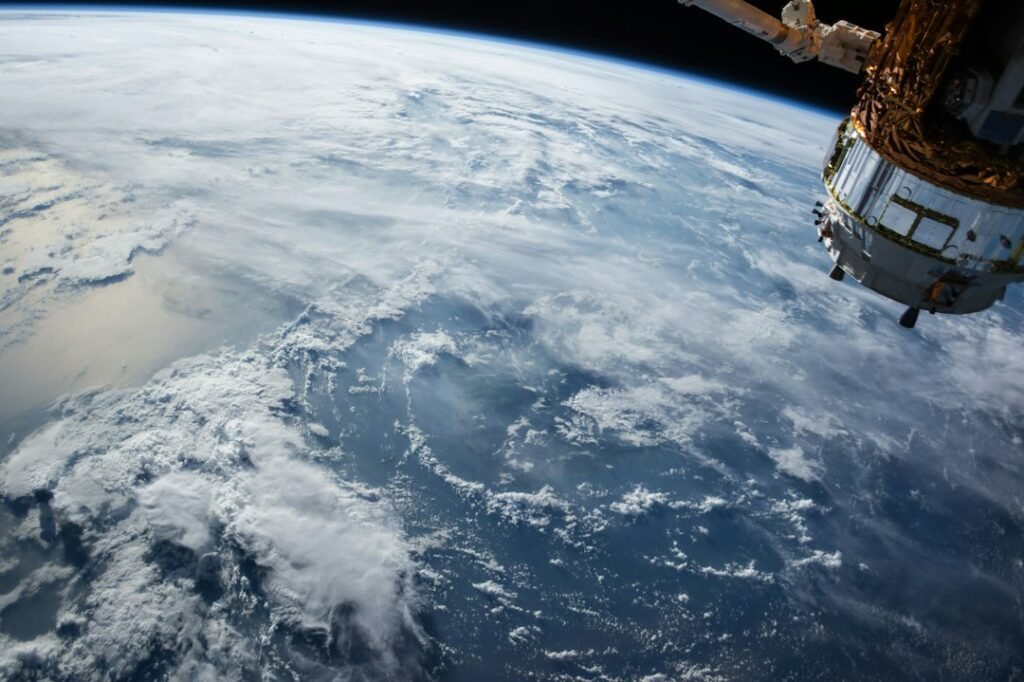
Google’s Project Suncatcher satellite is now in orbit, but the experiment it carries has only begun. In an October 1, 2026 update, the company said it had established contact with the craft, built alongside satellite operator Planet and launched aboard SpaceX’s Transporter-18 rideshare mission.
The project explores whether a future generation of machine-learning infrastructure could operate in space. What launched was a prototype intended to collect engineering data, not an orbital data center open to customers. That distinction matters because the technical questions involved are far harder than placing a computer inside a satellite.
The first question is whether AI hardware survives the environment
Google plans to observe how tensor processing units, or TPUs, respond to radiation, thermal extremes and the physical stress of launch and spaceflight. TPUs are specialized chips used for machine-learning tasks. In a terrestrial facility, operators can control temperature, power and physical access much more easily than engineers can in orbit.
In the October 1 mission report, Google said the satellite was operating as expected after contact was established. The update identified a plan to collect in-orbit measurements over the following weeks. It did not provide results from a completed long-duration reliability trial.
Scientists can model radiation and test components in laboratories, but a flight experiment provides observations from the environment a future system would actually encounter. That makes the launch relevant to hardware research even if no large-scale space-computing network follows from it.
Space is not a shortcut around data-center cooling
Modern AI infrastructure generates substantial heat. Earth-based data centers remove it using carefully engineered air, water or liquid-cooling systems. In the vacuum of space, equipment cannot depend on air moving heat away; spacecraft must manage temperatures by other means, including radiating energy outward.
There are power and communication challenges too. A computing satellite has to capture or store energy, transmit information to and from other systems and continue functioning without an engineer on site. Orbit also introduces questions about hardware lifespan and replacement. A business may replace a failed server in hours; repairs to orbital equipment are another matter.
Google has published research connected with Project Suncatcher in the journal Joule, according to the company’s update. That research helps explain the approach, but laboratory studies and a successful launch cannot by themselves establish the cost or reliability of a commercial service.
Why would anyone put AI computing in orbit?
The underlying idea is worth studying because demand for computing capacity has turned electricity supply, cooling and facility construction into central questions for the AI industry. Researchers are exploring whether different physical locations could eventually change those constraints. Space offers access to solar energy in certain orbits, but it also imposes launch, thermal-control, communication and maintenance costs.
It is tempting to conclude that space-based computing will be cleaner or cheaper. The October 1 announcement does not establish either claim. A credible comparison would need evidence about satellite manufacturing, launch emissions, usable power, computing performance, service life, ground infrastructure and the replacement of failed equipment.
Even the performance of one prototype does not scale automatically to a constellation. Data transfer between many satellites and ground users adds a separate engineering problem. Space debris and end-of-life handling would also be relevant to any larger deployment, regardless of how well the electronics perform.
The immediate implications are for researchers
For Google, the useful near-term output is experimental data. Engineers can compare in-orbit conditions with their earlier models and refine designs accordingly. A successful experiment could justify more research; disappointing measurements could expose limitations that are better discovered in a prototype than after a more expensive deployment.
For companies choosing infrastructure now, the launch changes little. Existing choices still depend on service reliability, security, location, cost and contractual requirements. BitCodeSolution’s website performance testing comparison discusses another aspect of infrastructure evaluation: judging actual measured performance rather than relying solely on a headline claim.
There is a clear next step to follow in the story. Google said it would gather measurements in the weeks after the October 1 launch. Those observations should help answer whether the hardware withstands the radiation and temperature conditions it was sent to test. Until those results are available, any larger prediction about orbital AI computing remains a forecast rather than a demonstrated capability.
The launch establishes two facts: the prototype reached orbit and Google made contact with it. The experiment will be judged by what the team learns after that, not by how ambitious the project’s long-term vision sounds.
Source: Google Research’s October 1 report. Independent performance and commercial feasibility have not been established by the launch report.